🏁 Core Gameplay & Racing Feel
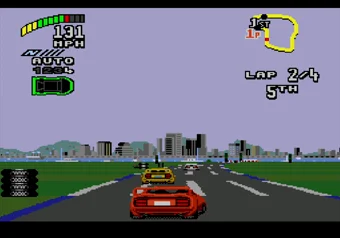
Top Gear 2 is a pure arcade racing game built around speed, clean controls, and long championship progression. The handling is simple and direct - accelerate, brake, steer, and use nitro boosts when needed. You don't fight the controls here - the car reacts quickly and predictably, which makes the game easy to pick up even for first-time players.
There is no civilian traffic on the tracks. Every race is focused entirely on competing against AI opponents, and that's where the real challenge comes from. Rivals gradually become faster as you move through the championship, forcing you to drive more precisely and use nitro strategically instead of wasting it early.
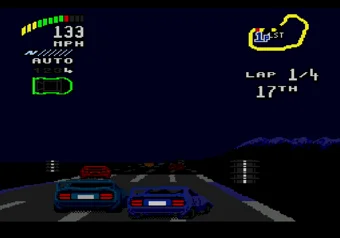
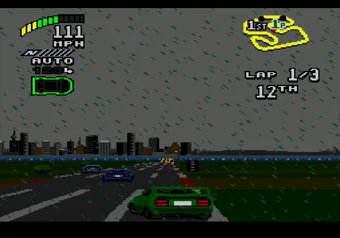
Race conditions play a noticeable role in how the game feels. Rain, snow, fog, and night races reduce visibility and make mistakes easier to commit. While the physics remain arcade-style, these conditions still demand more attention, especially on faster tracks where reaction time matters.
Despite its length - a full championship spans dozens of races - Top Gear 2 stays consistent and fair. Losses usually come from poor driving decisions rather than random behavior. This balance between accessibility and challenge is what gives the game its lasting appeal and makes long play sessions feel rewarding rather than exhausting.
🌍 Tracks & World Tour Structure
Top Gear 2 is built around a large championship that feels closer to a world tour than a short arcade run. The game features 16 countries, each represented by four separate tracks, which gives the full championship a strong sense of progression and distance.
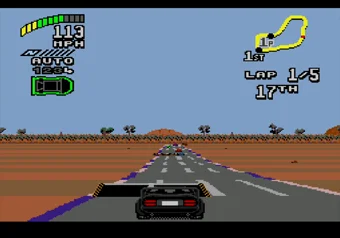
Each location has its own visual identity. You race through deserts, snowy regions, forest roads, and city environments, with backgrounds and color palettes that clearly change from country to country. While the core racing mechanics remain consistent, these visual shifts help the long championship stay fresh and varied.
Track layouts also differ in pace and complexity. Some races favor long, high-speed straights, while others rely more on tighter turns and rhythm-based driving. As the championship progresses and AI opponents become faster, learning each track's flow becomes increasingly important.
Instead of relying on gimmicks, Top Gear 2 keeps its challenge grounded in track design and championship length. The steady move from country to country gives the game a clear structure and makes finishing the full tour feel like a real accomplishment rather than just a series of disconnected races.
🔧 Car Upgrades & Strategy
Progress in Top Gear 2 is closely tied to how you manage your car between races. After each event, you earn prize money based on your finishing position, and that money can be spent on upgrades that directly affect performance. These improvements aren't cosmetic - they noticeably change how competitive your car feels, especially as the championship goes on.
One of the key rules of the game is that you must finish each race in the top 10 to continue the championship. This makes consistency more important than chasing first place every time. A risky driving style can easily push you out of qualifying positions, while a steady race with fewer mistakes is often the smarter choice, especially in later stages.
Upgrades allow you to shape your strategy. A stronger engine improves top speed, better tires help with control, armor reduces the impact of collisions, and nitro upgrades give you more flexibility when overtaking. Because money is limited early on, choosing which parts to improve first becomes an important decision rather than a routine upgrade path.
As opponents grow faster, relying on raw driving skill alone becomes harder. Smart spending, clean racing, and knowing when to push - or when to settle for a safe top-10 finish - are what keep the championship going. This balance between racing and decision-making gives Top Gear 2 more depth than it might appear at first glance.
⭐ Interesting Facts
🌍 Different Name in Japan
In Japan, Top Gear 2 was released under a different title - Top Racer 2. This naming was used to avoid confusion with the British TV show Top Gear and was applied to multiple games in the series released in that region.
🕹 Released on Multiple Platforms
Although many players remember the game from the SEGA Genesis/Mega Drive, Top Gear 2 was also released on SNES, Amiga, and Amiga CD32. Each version shared the same core design but featured technical differences, especially in sound and certain gameplay mechanics.
🔑 Password-Based Progress System
Progress in Top Gear 2 is saved using passwords. After finishing a group of races, you receive a code that allows you to continue the championship later.
🏆 Qualification Matters More Than Winning
Winning races is not mandatory. To continue the championship, you only need to finish in the top 10. This design choice encourages consistent driving and smart decisions rather than constant high-risk racing for first place.
🛠 Damage Affects Performance
The Genesis/Mega Drive version includes a car damage indicator. Heavy collisions can reduce performance and make the car harder to control, adding an extra layer of risk when driving aggressively or relying too much on nitro boosts.
⚡ Pickups on the Track
During races, players can collect on-track items such as extra nitro boosts and bonus cash. These pickups can provide short-term advantages and help fund upgrades later in the championship.
Top Gear 2 remains a strong example of how arcade racing games were built in the early 90s. It doesn't rely on complex mechanics or realism - instead, it focuses on clean controls, steady progression, and long championship runs that reward consistency. The mix of simple driving, meaningful upgrades, and varied tracks keeps the experience engaging without feeling overwhelming.
Played today, the game still holds up thanks to its clear structure and fair challenge. You can play Top Gear 2 online right here in your browser, making it easy to jump into a few races or take on the full world tour whenever you feel like it - a great way to revisit a classic SEGA Genesis/Mega Drive racer at your own pace.