🧩 Cheat Codes & Secrets
Even heroes like Woody sometimes need a shortcut! Toy Story on SEGA Genesis/Mega Drive includes two well-known tricks that can make your journey easier - or just more fun to explore. The Level Skip cheat is entered as a code, while Invincibility requires a special in-game sequence.
Level Skip
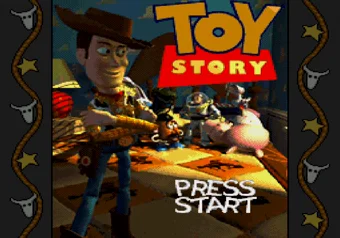
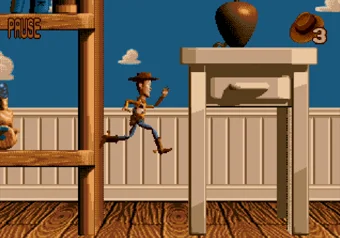
At the title screen - where Woody appears and you're prompted to press Start - enter the following combination:
LKLSpaceLLKL
If done correctly, Woody will shout "Hot, Hot, Hot!". Start the game, and whenever you find a level too difficult, simply pause the game by pressing Enter and press L to skip it instantly.
Invincibility
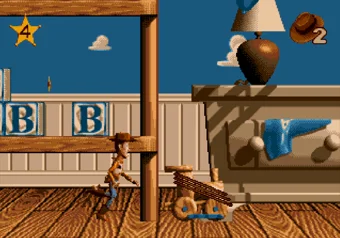
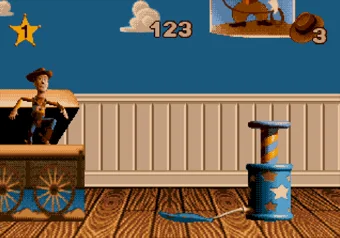
To make Woody invincible, start the second level, "Red Alert". Collect exactly 7 stars - no more, no less - and then jump into the toy box.
While inside, press for about 5 seconds (or until the top-left star on the screen begins to spin). Once it starts spinning, Woody becomes invincible.
✨ Fun Facts
🎬 Genesis was the lead platform
Released in 1995, Toy Story was developed by Traveller's Tales with the SEGA Genesis/Mega Drive as the main development platform. It was later adapted for the SNES, Game Boy, and Windows, but the Genesis version came first and served as the foundation for all others.
💡 Direct collaboration with Pixar
Traveller's Tales worked closely with Pixar during development. The team received 3D character models and animation references directly from Pixar, including early renders of Woody and Scud the dog. Because the final assets arrived very late - only a couple of weeks before SEGA's certification deadline - the developers created backup versions of their own just in case.
🛠 SEGA certification trick
To pass SEGA's notoriously strict quality testing, lead programmer Jon Burton reportedly disguised certain bugs as secret bonus areas or Easter eggs so that testers wouldn't flag them as crashes.
🌈 Pushing Genesis color limits
The Genesis hardware could display only a limited color palette, but Traveller's Tales found ways to mix and alternate shades to mimic the rich, pre-rendered look of the movie. This technique helped the game stand out visually among other late Genesis titles.
🧠 Pseudo-3D innovation
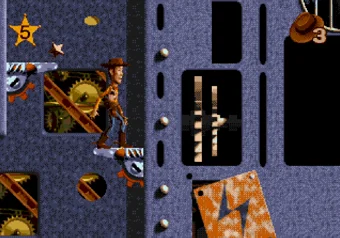
The level Really Inside the Claw Machine used a custom engine that simulated 3D movement on 16-bit hardware. Instead of true polygon rendering, the developers achieved the effect through clever sprite-scaling and scrolling tricks - an impressive technical feat for its time.
🖥 Differences between versions
The Genesis edition includes extra animation frames, slightly longer cutscenes, and even a hidden bonus game when collecting a certain number of stars - features missing from the SNES release.
📅 U.S. release date
The Genesis version of Toy Story launched in North America on November 25, 1995, near the film's theatrical debut.
🏆 A late-era Genesis milestone
Critics and fans alike consider Toy Story one of the most advanced 16-bit games ever released. Its smooth animation, clever level design, and ambitious 3D effects pushed the Genesis/Mega Drive to its technical limits and showed just how far SEGA's hardware could go.
🕹 Legacy & Reception
When Toy Story arrived on the SEGA Genesis and Mega Drive in late 1995, critics were genuinely impressed. Reviewers praised its smooth animation, detailed environments, and the way it managed to capture the heart of the movie on 16-bit hardware. Many magazines at the time - including GamePro and Mean Machines SEGA - called it one of the most visually advanced platformers ever made for the system.
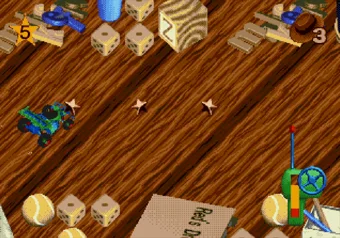
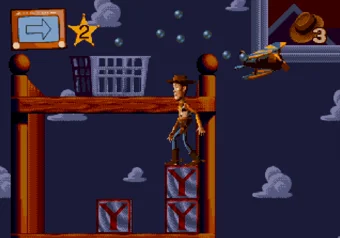
Beyond its graphics, players appreciated the variety in gameplay. Each level offered something different: traditional platforming, puzzle-solving, racing on the RC car, or navigating 3D-inspired sections that pushed the console to its limits. This constant change of pace made Toy Story feel fresh from start to finish - a rare quality for movie-based games of the era.
Traveller's Tales went on to become one of the most technically creative studios of the 1990s, later gaining worldwide fame for the LEGO video game series. Toy Story stands as one of their early milestones - a project that proved licensed games could be more than simple tie-ins.
Today, Toy Story is remembered not just as a nostalgic trip back to the mid-'90s, but as a showcase of what SEGA's hardware could achieve at its peak. You can experience it again right here online - still colorful, challenging, and full of Pixar charm.